Showing posts with label Technology. Show all posts

Sunday, October 26, 2014

2014 Top 10 Best Christmas Gift ideas under $20 (10 món quà Giáng sinh 2014 tôt nhất trên Amazon giá dưới $20 )

1. Waterproof Mini Silicone Mushroom Sucker Wireless Stereo Bluetooth Speaker, Red With MOGOI Accessory

$7.89 & FREE Shipping
 
 
 2. iPhone 6 Case, Maxboost® [Vibrance Series] iPhone 6 (4.7) Case [Lifetime Warranty] Protective SOFT-Interior Scratch Protection Metallic Finished Base with Vibrant Trendy Color Slider Style Hard Case for iPhone 6 (4.7 inch) (2014) - Italian Rose / Champagne Gold


      $14.99

Click here to see more info 


  3. Amazon.com Gift Cards - E-mail Delivery

 $0.50 - $2,000.00  click here to buy


4. Death Wish Coffee, The World's Strongest Ground Coffee Beans, Fair Trade and Organic, 16 Ounce Bag 

$19.99 ($1.25 / oz) & FREE Shipping on orders over $35

click to buy or see more info


4. Waterproof Rear Vehicle Backup Camera With 170 degree Viewing Angle

$12.95 + $2.99 shipping         click here to see more info or purchase this product

5. Smallest Wireless Stereo Music Bluetooth 3.0 Headset Hands-free Earphone Headphone Random color

 
$7.05 + $0.99 shipping 
   Click here to buy         
 

6.  Dirt Devil Simpli-Stik Lightweight Corded Bagless Stick Vacuum, SD20000RED   $17.00  Click here to buy from Amazon

7.  H2NO® DRY BAG, Blue-Camo, Waterproof Case for Apple Iphone 6, Iphone 6+, Iphone 4S, Iphone 5, Samsung Galaxy and similar sized Mobile Devices. IPX8 Certified to 100ft Deep, TOP RATED PVC Soft Carrying Case for Iphone & Similar Mobile Devices. IPX8 Certified PVC Soft Case + Thermometer + Lanyard + Armband. Made of Strong PVC Material, MUCH STRONGER than competing cases. And No Need for a Stylus Pen for this Case - You can text, take pictures and everything using your finger! Color= Blue-Camo.

Sale:


8. Oster FPSTBW8207-S Electric Wine Bottle Opener, Silver

Price:  $19.99    click here to order


9.  Eva-dry Renewable E-333 Wireless Mini Dehumidifer 

Price  $ 19.95   Click here to order


10.    Lasko 102 My Heat Personal Ceramic Heater, Blue

Price  $17.97    Click here to order


 Dịch vụ Pro of San Diego                      (Văn phòng kế toán và luật pháp)
 Bảo lãnh di trú


  Dịch vụ Bảo lãnh di trú (Văn phòng kế toán và luật pháp) 

Rao vặt miễn phí không cần đăng ký  


Sunday, October 23, 2011

Microsoft YouTube Channel Hacked


Computer giant Microsoft’s official YouTube channel appears to have been hacked Sunday morning. All of the official videos, including recent ad campaigns, have been removed from the account. In their place are short clips soliciting advertisers, not surprisingly, as the channel has some 24,000+ subscribers.

As of 1:30 p.m. ET, four videos have been uploaded to the account, all time-stamped within the past two hours. A fifth video, most recently uploaded, seems to have been removed. The video, “Garry’s Mod – Escape the Box,” featured what appeared to be an animated gunman shooting at the inside of a construction box.

The channel’s description reads, “I DID NOTHING WRONG I SIMPLY SIGNED INTO MY ACCOUNT THAT I MADE IN 2006 :/.”

Wednesday, October 19, 2011

Microsoft researchers want to turn your hand into a touchscreen


Multitouch screens are so versatile and easy to use, why limit them to smartphones and tablets? Researchers have been working for several years to extend multitouch to arbitrary surfaces, but a project called OmniTouch from Microsoft Research and a PhD student at the Human-Computer Interaction Institute at Carnegie Mellon University may bring it closer to reality.

OmniTouch turns body parts and nearby surfaces into touch interfaces. Users can read and reply to an e-mail by touching their hands or a nearby wall, or even use multiple applications at once on multiple surfaces. The results from a user study “suggest our prototype system approaches the accuracy of conventional, physical touch screens, but on arbitrary, ad hoc surfaces,” the researchers say in a video.

The project is led by Carnegie Mellon student and former Microsoft Research intern Chris Harrison and Microsoft researchers Hrvoje Benko and Andrew Wilson. “We wanted to capitalize on the tremendous surface area the real world provides,” Benko says in a Microsoft research article. “The surface area of one hand alone exceeds that of typical smart phones. Tables are an order of magnitude larger than a tablet computer.”

OmniTouch is reminiscent of the SixthSense system developed at the MIT Media Lab, which had students projecting a gestural interface onto the world around them with the help of a device containing a projector, mirror and camera worn around their necks, as well as sensors placed upon their fingers. OmniTouch, however, requires only a device to be worn on one’s shoulder, with nothing special on the hands or arms. A research paper on OmniTouch notes the influence of SixthSense and other similar projects, but says these systems did not create true touch interactions because they “could not differentiate between clicked and hovering fingers.” The limitation was due partly to an “inability to track surfaces in the environment, which also made it impossible to have the projected interface change and follow the surface as it moved.”

The proof-of-concept OmniTouch system consists of a depth-sensing camera and laser-based pico-projector. It is tethered to a desktop computer in its prototype stage, so is not yet truly portable.

Using technology principles similar to Microsoft’s Kinect, OmniTouch starts by generating a depth map of a scene, while isolating fingers from appropriate touch surfaces, including a hand, forearm, notepad, table, or wall. While researchers say the system generates few false positives, it is sensitive to the angle at which fingers appear in front of the camera. Some sophisticated computation is performed to differentiate fingers touching a surface from fingers merely hovering above a surface.

“In this case, we're detecting proximity at a very fine level,” Benko says. “The system decides the finger is touching the surface if it’s close enough to constitute making contact. This was fairly tricky, and we used a depth map to determine proximity. In practice, a finger is seen as ‘clicked’ when its hover distance drops to one centimeter or less above a surface, and we even manage to maintain the clicked state for dragging operations.” In user trials involving 12 participants, 96.5 percent out of 6,048 clicks were correctly perceived by the system. In the remaining 3.5 percent, the system either did not perceive a click or incorrectly detected more than one.

Potential applications include projecting a full keyboard onto a table, zooming in and out of a map projected onto a notepad, or turning a paper document into an interactive surface for the purpose of adding annotations.

“It is now conceivable that anything one can do on today’s mobile devices, they could do in the palm of their hand,” Microsoft says on the project website. Although the shoulder contraption is bulky, Microsoft says there are no significant barriers to miniaturization and the entire system could eventually be the size of a matchbox and worn as a pendant or watch. But there’s no indication of concrete plans to turn this into a commercial product.

Beyond tracking a person’s fingers and environment, the system must also project interfaces similar to what we might expect in a smartphone. OmniTouch uses several methods, including creating a “lock point” to provide an interface that will stay on the surface—such as your hand—as it moves. OmniTouch can automatically generate interfaces on easily distinguishable objects, like a notepad, table and wall, but researchers say more sophisticated depth-driven object recognition will be needed to make the system capable of recognizing literally any surface. They have introduced one way to sidestep the complications, by letting the user define the surface by “clicking” to create a generically sized area or by clicking and dragging to create one of a custom size.

Once the surface is defined, projecting the interface is relatively straightforward “since our projector is precisely calibrated to the depth camera coordinate system.” The prototype projects a 2D interface, but the team says “our approach easily lends itself to experimenting with 3D interfaces that take into account the true geometry of the projected surface.”

OmniTouch is one of two similar Microsoft projects being unveiled this week at the Association for Computing Machinery’s Symposium on User Interface Software and Technology in Santa Barbara, Calif. The second project is called PocketTouch, and lets users interact with their smartphones without removing them from their pockets.

Instead of taking your phone out of your pocket to dismiss a call or quickly respond to a text, PocketTouch lets you manipulate the phone simply by touching the outside of your pocket. For example, a user could trace letters on the outside of a pants pocket in order to write a text message. Researchers tested the prototype on 25 types of fabrics to ensure responsiveness. While the prototype is unwieldy, with extra hardware and a cable attached to the phone, it could theoretically be modified to work with a smartphone’s capacitive touchscreen.

Tuesday, October 18, 2011

Apple Misses Big on Earnings, Revenue; Shares Tumble


The miss stunned Wall Street: Apple shares [AAPL 422.24 2.25 (+0.54%) ] tumbled after-hours and were down more than 7 percent at one point.

Earnings and revenue rose sharply from a year earlier but the number of iPhones sold disappointed, which caused the miss.

Apple earnings excluding items rose to $7.05 a share in its fiscal fourth quarter from $4.64 per share a year earlier.

Net income rose to $6.62 billion from $4.31 billion.

Revenue jumped 39 percent to $28.3 billion from $20.3 billion in the 2010 third quarter.

Analysts had expected the technology giant to earn $7.39 per share on revenue on $29.69 billion. It was the first miss for the company since 2004.

The company sold 17.07 million iPhones during the quarter; That was a 21 percent increase from a year earlier but Wall Street had expected something in the 18 million to 20 million range, given that 20.3 million were sold in the third quarter.

Apple's CFO said that number beat their internal projection but sales were hurt by customers waiting for the new version of the iPhone.

IPad sales more than doubled to 11.12 million, while Mac sales jumped 26 percent to 4.89 million. IPod sales fell 27 percent to 6.62 million.

Gross margin came to 40.3 percent, a tad higher than Wall Street's forecast of 39.74 percent. International sales accounted for 63 percent of the quarter's revenue.

The company did, however, deliver a better-than-expected outlook for the fiscal first quarter, which starts in October. Apple said it expects earnings of $9.30 a share for the first quarter; analysts had expected $9.01 a share, according to Thomson Reuters.

"What is interesting is the guidance is less conservative than usual for their next quarter. It's a timing issue, where it looks like the business that people thought would be in the September quarter is occurring in the December quarter," said Sterne Agee analyst Shaw Wu.

"One of the things obviously is the iPhone 4S just started shipping a few days ago."

This was the first quarterly report issued by Apple under the leadership of CEO Tim Cook, who took the reins in August after Steve Jobs stepped down. Jobs passed away on Oct. 5.

Cook takes over during a critical juncture for the company, which is battling a fast-rising Google [GOOG 590.51 8.10 (+1.39%) ] in the mobile arena while fending off consumer electronics giants such as Samsung and Amazon.com [AMZN 243.88 1.55 (+0.64%) ].

"Expectations for this company were red-hot, that is why we downgraded it,'' said BGC Partners analyst Colin Gillis, who lowered his rating on the shares days before. "The reality is their business is not an annuity. They have to sell their quarter's worth of revenue every 90 days."

"They had a big upgrade cycle with the iPhone, the numbers came in weak. They need to set records every time they report to keep up the momentum."

"There's no question this was a transition quarter ahead of the 4S," said WP Stewart portfolio manager Michael Walker. "With the early pace of iPhone 4S sales, my guess is that disappointment is relatively short-lived."

"I'm not going to call Q3 a throwaway quarter for iPhones, but it was definitely transition," he said.

Tuesday, October 4, 2011

Apple Introduces a New iPhone 4S


Although the new phone is virtually indistinguishable on the outside from its predecessor, the iPhone 4, the company says it is packed with better technical innards, including a more advanced camera. The phone also includes a more powerful chip known as the A5, the same microprocessor that acts as the brains inside the iPad.

The company also said the new phone would run on two kinds of cellphone networks, GSM and CDMA, allowing its operation worldwide.

Despite the new features and the improved technology, Apple fans expressed disappointment on Twitter about the lack of a design change. Investors reacted as well, sending the stock down 5 percent, although they regained most of those losses by the time trading closed.

Preorders for the iPhone 4S start on Friday; the phone goes on sale on Oct. 14. Prices start at $199 for a model with 16 gigabytes of storage.

Apple will continue to sell its older iPhone 4 through its wireless carrier partners, which will drop the price to $99 from $199 when customers commit to a two-year contract. An even older model of the device, the iPhone 3GS, will be free, instead of $99, with a two-year contract.

The new phone will be available on the AT&T, Verizon and Sprint networks.

“When you think about it, only Apple could make such amazing software, hardware and services and bring them together into such a powerful, yet integrated experience,” said Timothy D. Cook, Apple’s chief executive officer, who introduced the new phone at an event here at the company’s headquarters.

Mr. Cook’s appearance was his first at an event introducing a new Apple product since he took over as chief executive from Steven P. Jobs in August. Mr. Jobs was a master pitchman for Apple’s new products, captivating audiences with introductions that seemed off the cuff but were always meticulously rehearsed.

Mr. Jobs, founder of the company, left the top job for health reasons, and became chairman of Apple’s board.

Since the first iPhone was unveiled in 2007, Apple has come out with a new version each year, usually with an eye-catching new design, speedier technical performance and a fresh operating system packed with new features. While Apple generally has released the new versions in June, this one is coming out much closer to the crucial holiday selling season.

With every new iPhone, Apple faces the challenge of how to entice its legions of fans to upgrade to the new device and to convert the much larger pool of people who don’t yet own one. The second task is the more difficult one, as mobile phones running the Android operating system by rival Google have flooded the market, with wider distribution from wireless carriers, more hardware choices and often cheaper price tags.

When the previous iPhone update was released, in June 2010, Apple and Google each accounted for about the same share of new smartphone sales. Since then the market has shifted dramatically in Google’s favor. During the second quarter of this year, Android devices accounted for 43.4 percent of new smartphone sales to Apple’s 18.2 percent, according to the research firm Gartner.

Both companies’ mobile businesses are growing swiftly as they steal share from rivals like the maker of the BlackBerry, Research in Motion, that have fallen behind their technical innovations.

The iPhone is the most critical product in Apple’s line-up and the largest source of its revenue, accounting for more than $13.3 billion — almost half of total company sales — in the most recent quarter.

Friday, September 23, 2011

NEW VIRUS DETECTED VIA INTERNET MAIL SUCH AS YAHOO...

ATTENTION PLEASE: Anyone-using Internet mail such as Yahoo, Hotmail, AOL and so on. This information arrived this morning, Direct from both Microsoft and Norton. Please send it to everybody you know who has Access to the Internet. You may receive an apparently harmless e-mail titled "Here you have it". If you open the file, a message will appear on your screen saying: 'It is too late now, your life is no longer beautiful, f*** you and die....' Subsequently you will LOSE EVERYTHING IN YOUR PC. And the person who sent it to you will gain access to your Name, e-mail and password, etc. This is a new virus which started to circulate on Saturday afternoon. AOL has already confirmed the severity, and the antivirus software's are not capable of destroying it. ... The virus has been created by a hacker who calls himself 'life owner'. PLEASE SEND THIS TO ALL YOUR FRIENDS, And ask them to PASS IT ON IMMEDIATELY.

Thursday, September 1, 2011

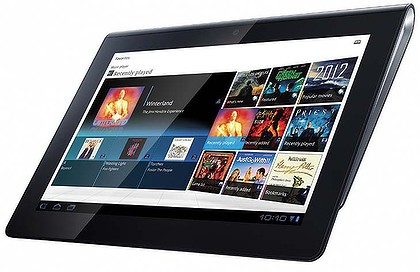
The Sony Tablet S to compete with ipad

The Sony Tablet S, about the size of an iPad, can hook into Sony's online services and PlayStation games.


Sony is serving up a real competitor to the iPad 2, presenting Apple's new CEO Tim Cook with his first big test after Steve Jobs stepped down.

The company today launched its first two tablet computers, with some features that aim to set them apart from the herd of iPad competitors. Analysts have praised Sony's design and functionality but are doubtful it will have much success without a significant price cut.

The wedge-like Tablet S will go on sale in Australia at the end of October but will be available for pre-order from the end of September. The 16GB and 32GB versions will sell for $579 and $689, respectively. This is a markup on the US prices of $499 and $599. The other new model, the dual-screen clamshell Tablet P, is not expected to launch this year.

Monday, August 29, 2011

ZYNGA is going public

ZYNGA -is going public and there will be public offerings in Oct.
their financials is different from most traditional companies therefore will be a delay in investors confidence. I would buy their stock since I love to play the poker game and we should have a great deal on their IPOs

Tuesday, August 23, 2011

Facebook announces changes to privacy settings, including "tag" approvals.

Facebook gives users easier privacy controls

Facebook will begin making changes Thursday to give users more control of how they share content, and some of the shifts mirror popular elements of Google's (GOOG) new social network, Google+.

The changes, announced Tuesday in a blog post by Facebook executive Chris Cox:

-- Users will be able to change the privacy settings of each post at the time they share them. Facebook will add a drop-down menu at the bottom of the box in which users enter a status update or other post, with options for "Public," "Friends" or "Custom." The options resemble the "Circles" feature in Google+, which allows users to easily group their friends into specific subsets and choose which subsets see content in a similar, by-the-post manner. Facebook users will also be able to change the privacy setting of an update after it has been posted, also a Google+ feature

"Tags," which link a person's profile to a photo or other user's post, can now be pre-approved by the tagged users. Facebook will provide an option for users to approve any tag in a photo or post before the content actually links to their profile. Users will also have the ability to approve any tags added to their photos and posts by others.

-- Users can now tag people with whom they are now Facebook friends, and can tag any posted content with a location, negating the need for Facebook's Places feature. Places will be phased out.

-- Privacy settings can now be accessed through drop-down menus directly next to the profile aspect affected. Previously, Facebook privacy settings could only be controlled on settings pages that some users had problems finding.

To sum up the changes, Cox said "Your profile should feel like your home on the Web -- you should never feel like stuff appears there that you don't want, and you should never wonder who sees what's there. The profile is getting some new tools that give you clearer, more consistent controls over how photos and posts get added to it, and who can see everything that lives there."

Asked by Mercury News staff writer Mike Swift about the similarities between Facebook's new features and Google+, a Facebook spokesperson said "We've been working on building these updates over the last few months and, as we said a few weeks ago, this is launch season and we're ready to get it out of the door."

In other Facebook news from Tuesday, a company executive said in an interview that the Palo Alto-based social network is looking to acquire about 20 companies this year. So far, they have bought 13 companies in 2011.

Monday, August 22, 2011

Microsoft-acquired Skype snaps up GroupMe Messaging on mobile isn't just about video and voice: Skype acquires GroupMe for its group text

Microsoft-acquired Skype snaps up GroupMe
Messaging on mobile isn't just about video and voice: Skype acquires GroupMe for its group text


The big fish eats the medium fish and the medium fish swallows the small fish. Three months after being acquired by Microsoft, Skype is making its own acquisition.

Skype announced Sunday that it has agreed to acquire GroupMe, provider of mobile group messaging applications. Terms of the deal were not disclosed.

As part of the deal, the GroupMe team will remain intact at its headquarters in New York City and will continue to work on its own application.

"Skype and GroupMe have a shared vision of creating applications and experiences that are the daily communications choice for a billion people. We will continue to seek the top talent and technology to make that vision a reality," said Tony Bates, Skype's Chief Executive Officer. "The GroupMe team has created an incredibly sticky group messaging experience that works across mobile devices and platforms, making this a perfect addition to the voice, video and text products in the Skype family.”

The beneift is obvious for Skype: it gains immediate access to a thriving text-based communication service. (We know GroupMe thrives because it had raised over $11 million in venture capital from a list of prominent investors: Khosla Ventures, General Catalyst, First Round Capital, and previous backers SV Angel, Lerer Ventures, and betaworks.)

GroupMe, in turn, is thrilled to access the eyes of Skype’s 175 million monthly users.

Acquisition hadn’t been the intention on either side since the outset. Rather, Skype and GroupMe originally met to discuss possible partnerships. According to GroupMe’s official blog post about the news:

Over the last few months, we had been in talks with Skype that started with discussions about potential commercial partnerships. As we got to know the core Skype team better, though, and as our conversations evolved, it quickly became evident that our visions were perfectly aligned. Both companies are focused on changing the way the world communicates, and helping people stay in touch with the people they really know. With a shared vision—an ambitious one—we decided our efforts to own real-time communications and the real life network could be best executed as one company.

The newly announced acquisition is of extra interest because it comes five months after Facebook picked up the two-person team behind Beluga, another startup that had been developing a mobile group messaging application. A week and a half ago, the fruits of that acquisition came to light in the form of Facebook Messenger, a new app for Android and iPhone built specifically for mobile messaging.

That’s not all, though.

In early July, Facebook announced the launch of video chat on its own platform, made possible via a partnership with Skype. And largely unnoticed behind all of these workings is Microsoft, who not only bought Skype in May for $8.5 billion in cash but also owns a stake in Facebook.

If it ever could, it can no longer be denied: the Microsoft-Skype-Facebook complex is working diligently at controlling the mediums for social communication in the 21st century. Apple and Google: your move.

Sunday, August 14, 2011

Is Google Plus the New Facebook?

Google Plus is the new invitation-only social media kid on the block that wants to knock Facebook off the mountain. It has some significant advantages that Facebook can only dream about. Should you switch?

Google & Facebook Have A Gaming Fight

Facebook is set to go head to head with the Google+ site, which launched online games last week.

Late last week Facebook posted an update blog claiming that it will roll out a live game messaging system that gives updates on friends' recent moves.

The company also increased the size of its gaming screen and now allows users to bookmark their favorite games on the home screen.

The Wall Street Journal said that the moves are an attempt by Facebook to quell the concerns of game developers, who have had an increasingly tense relationship with the social network over the last year.

Google+ adds games to compete with Facebook

It's easy to knock social games like FarmVille as a nuisance or a mindless waste of time.

But these games have built a massive and engaged army of users, many of whom drop real money into the programs.

More than 200 million people play games on Facebook each month, the social network says. The developers behind these games have made millions.

Google+, the search giant's new social network, made a significant play for a chunk of Facebook's empire late last week with the introduction of a platform for gaming.

Saturday, August 13, 2011

Rumor Mill: Windows Phone "Mango" to Be Released Sept. 1

Microsoft (NAS: MSFT) is expected to start releasing the Mango software update for its Windows Phone platform starting Sept. 1, according to a rumor on the blog Pocket-Lint, at least a month before Nokia (NYS: NOK) is expected to be ready with a compatible handset.

While this decision seems set to please handset vendors anxious to use the update to combat Apple's iOS and Google's Android, Nokia would appear to have been sidelined after many observers thought the Finnish company would be the first to use the new software.

However, it seems that Microsoft wants to make the launch an international event by aligning the release date with the giant IFA exhibition, the largest consumer-electronics event in Europe. This would allow Acer, LG, Samsung, and ZTE to showcase their Mango handsets to a wide audience before the Nokia device makes its debut toward the end of October.

Pocket-Lint, citing unnamed sources, said that Microsoft plans to release the updated software to users starting Sept. 1. In a Twitter post, Windows Phone Vice President Joe Belfiore said only: "Sept. 1? Just a rumor." However, a report carried by Cellular News says that Taiwanese OEM handset manufacturer Compal is rumoured to be ready to start shipments on Nokia's first Windows Phone device next month. According to the rumor, Compal will deliver 2 million Windows Phone smartphones to Nokia in the fourth quarter of this year.

Separately, Gartner has reported that Microsoft's market share of the smartphone OS market has plummeted compared with a year ago. The market-research firm said the company's share of the smartphone sector fell to 1.6% of the market in the second quarter of 2011, compared with 4.9% in the year-ago quarter.